PREPARE 4X4
HOW DO I PREPARE MY ALL-TERRAIN VEHICLE?

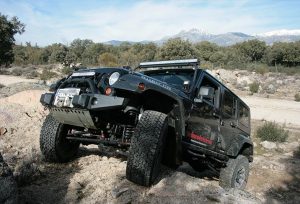
Prepare a 4x4 vehicle It becomes as much an art as it is a science. This article delves into the world of off-road vehicle customization, exploring crucial aspects such as investing in accessories and parts, choosing the ideal model, and the most expensive parts in transforming a 4x4. From tips for beginners to insights for off-road veterans, we'll cover how to maximize your vehicle's performance and safety to tackle any challenge nature puts in your way. Get ready to discover how to turn your 4x4 into an unstoppable machine, ready for adventure.
REQUEST INFORMATION FOR PREPARE YOUR 4X4
HOW MUCH DO I INVEST IN PREPARING MY 4X4?
How much should I invest in accessories and parts for my 4x4?
Investment in accessories and parts for a 4x4 vehicle can vary widely depending on your goals and the level of preparation you're seeking. For a basic setup, including essential upgrades like all-terrain tires, a lifted suspension, and perhaps a winch, the costs can starting from around 5500 euros. However, for a more advanced setup, including suspension modifications, engine upgrades, navigation and communication accessories, and structural reinforcements, the costs can easily exceed 10,000 euros.
It is essential to prioritize based on how you will use your vehicle. For example, if you plan to use it primarily on difficult terrain, investing in good suspension and appropriate tires should be your priority. Accessories like winches and lighting systems significantly improve safety and functionality for extreme adventures.
WHICH CAR MODEL TO CHOOSE?
The choice of car model to prepare as a 4x4 is crucial and should be based on several factors such as parts availability, design robustness, and ease of modification. Models from the 80s and 90s Brands like Nissan, Toyota, Mitsubishi, Mercedes, or Jeep are often recommended due to their ladder chassis, solid axle suspension, and the ease of finding spare parts.
Vehicles like the Nissan Patrol GR, Mitsubishi Montero, and Toyota Land Cruiser They stand out for their durability and the wide availability of customization accessories. When choosing a model, also consider the user community: a model with an active community can offer valuable tips and recommendations for preparation.
What are the most expensive parts of an off-road vehicle preparation?
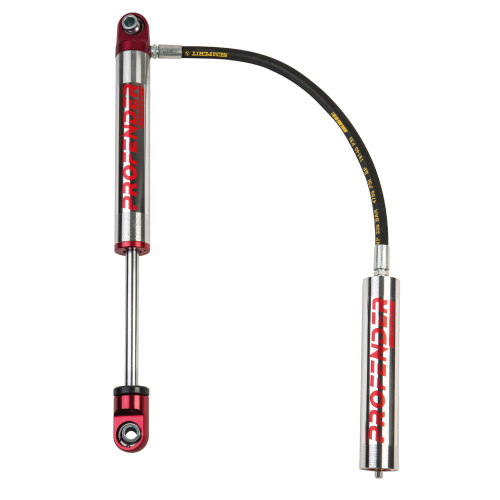
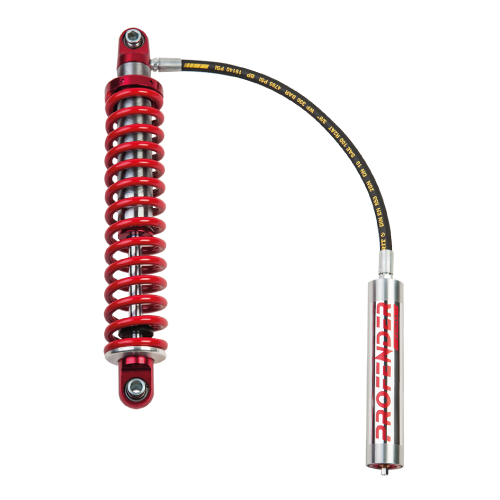
The most expensive parts in preparing an all-terrain vehicle are usually those related to improving off-road capability and safety. The suspension, Due to its crucial importance in handling and off-road capability, it represents one of the largest costs. A high-quality suspension, capable of withstanding rough terrain and providing good wheel articulation, can be a significant investment.
The Traction systems, including differential locks and transmission improvements, they can also be expensive but are essential for improving the vehicle's off-road capability. Winches and rescue systems, which are fundamental for security in difficult situations, represent another considerable investment category.
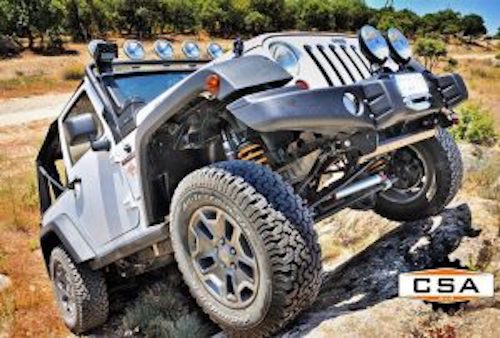
Body preparation and external protections such as Reinforced bumpers, running boards, and roll bars, not only increase safety but also cost. These modifications, in addition to improving aesthetics, protect the vehicle against damage when traveling over challenging terrain.
Finally, the engine customization Intake and exhaust system upgrades can be costly but are crucial for optimizing performance on varied terrain. These upgrades not only increase power but also ensure the vehicle can effectively tackle terrain challenges.

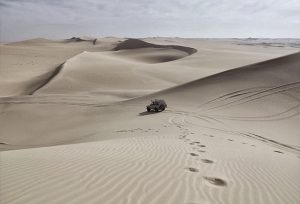
HOW TO PREPARE A 4X4 FOR THE DESERT?
The desert is an exciting place, yet remote and dangerous. To venture into it, you must be aware of where you are going, and to enjoy it properly, you must be prepared.
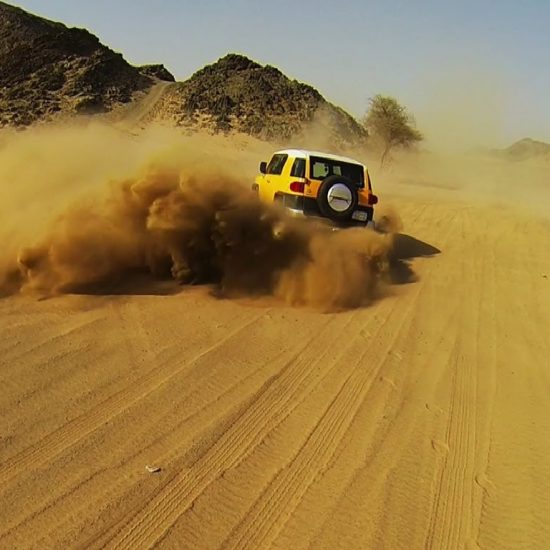
Driving an SUV on sand dunes requires specific handling and technique, which can become a great extreme sport once mastered. Besides, not everyone can prepare your 4x4. It's a good idea to know who you're leaving your car with. Make sure they have enough experience and are specifically a 4x4 modification professional.
In this article, we will remind you of the most essential things for traveling safely through the desert and how to make your experience very rewarding.
Due to its capacity, reliability, ruggedness, and comfort, the all-terrain vehicle is the best option for embarking on this adventure. It will allow you to explore every nook and cranny, move freely in a calm and pleasant way, regardless of the time of year.
Broadly speaking, this type of vehicle is equipped with an engine capable of withstanding stress off-road For driving on sand, mud, and steep inclines, four-wheel drive ensures better handling, and long-travel suspension absorbs uneven terrain more effectively.
Before you go to the desert, do this.
- Plan properly a Itinerary Preview kilometers, routes, and landmarks and get informed about weather conditions. For example, it's important to know the distance between resupply points and have sufficient fuel, plus a reserve. If this is your first time doing this type of excursion, we recommend you complete your itinerary by getting inspiration from online repositories where people voluntarily post their itineraries.
- It's better to prevent than to cure, so make a review Check your all-terrain vehicle before your trip to reduce potential breakdowns.
- To enjoy a safe experience, it's best to set aside overconfidence and be prudent.
- We recommend that you take one GPS with the territory maps already loaded to ensure that Don't get disoriented at any point if the climate is adverse.
- You should cover yourself in case of emergency. Bring a satellite phone or, if you're going in a group, a long-range radio, so we can communicate if needed.
- Calculate enough food and 2 to 3 liters of water per person per day for the time you will spend in the desert.
PREMISES TO TAKE INTO ACCOUNT BEFORE PREPARING A 4X4
Even though an SUV is already equipped for desert driving, we recommend that you take advantage of your vehicle so that the experience is even more worthwhile.
- 4x4s are already high, but if you wish, you can lift them a bit higher using modified suspensions and install a raised air intake to collect the cleanest air at higher altitudes.
- The wheels are the only contact between your 4x4 and the ground, so we recommend putting Tires off-road and take from spare part, since most breakdowns are flat tires.
- Know your capabilities deposit. If you consider extending the range of your 4x4, you have two options: either install a second fuel tank or use jerry cans to carry extra fuel. Always use jerry cans placed on the exterior of the car so that the smell does not affect you.
- Before walking on the sand lower the pressure of the tires and connect the four-wheel drive so that the engine's power is distributed to all 4 wheels.
- Avoid sudden movements and try to drive smoothlye and constant.
- In the desert, you never know, and it could be that you get stuck in the sand, especially if it's coarse-grained and difficult to compact. In case that happens, you should carry straighteners, a shovel, tow rope, air compressor, spare tire, extra battery, tire repair kits and others spare parts… it never hurts to have a backup plan.
What dangers should you try to avoid?
- To avoid breakdowns and breakage, it is essential to always be attentive to driving and constantly interpreting the terrain.
- Always leads to a moderate speed at a maximum of 60 km/h, this will reduce the possibility of causing damage such as suspension breaks, overheating, and blockages of filters and radiators.
- If you go in a group, keep a safe distance Keep a distance of 150 meters between vehicles so that dust from the vehicle in front of you doesn't reduce your visibility.
- If you feel like your SUV is starting to sink, don't accelerate. You must release the accelerator and let the vehicle stop on its own. When it has stopped, reverse with greater inertia.
5 ADDITIONAL TIPS
- Weight is the number one enemy of any vehicle. The less weight you carry, the better. To help with this, we recommend making a list, which will help you prioritize and determine what is truly important for your trip.
- Whenever you travel with more than one vehicle, it's advisable to avoid driving in the ruts left by the others, as virgin sand is firmer.
- In the desert, carrying more than one spare tire can be a real stroke of luck. It can serve as: an aid to traction plates for getting unstuck, a base for the jack, or an air tank to inflate the rest of the car's tires.
- Avoid sleeping in dry or semi-dry riverbeds under any circumstances. The desert climate is unpredictable and unstable. Furthermore, these riverbeds are characterized by sudden and strong water surges that sweep everything away.
- Using the air conditioning for extended periods, especially considering the extreme desert conditions, can overwork the engine. Therefore, our advice is to monitor its temperature regularly.